Showing posts with label Sneek Peek. Show all posts

Wednesday, August 30, 2017

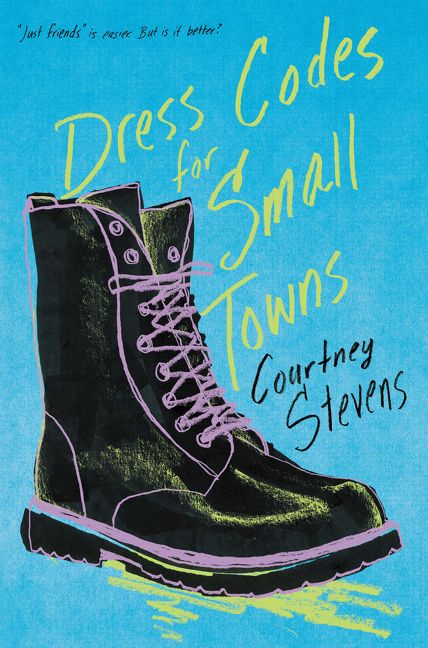
Enjoy An Exclusive Sneek Peek Of: Dress Codes for Small Towns by Courtney Stevens!

Dress Codes for Small Towns
As the tomboy daughter of the town's preacher, Billie McCaffrey has always struggled with fitting the mold of what everyone says she should be. She'd rather wear sweats, build furniture, and get into trouble with her solid group of friends: Woods, Mash, Davey, Fifty, and Janie Lee.

But when Janie Lee confesses to Billie that she's in love with Woods, Billie's filled with a nagging sadness as she realizes that she is also in love with Woods...and maybe with Janie Lee, too.

Always considered "one of the guys," Billie doesn't want anyone slapping a label on her sexuality before she can understand it herself. For Billie—a box-defying dynamo—it's not that simple.
 
LEARN MORE
 

THE SHORT PART
before
PART ONE


That’s the way things come clear. All of a sudden.
And then you realize how obvious they’ve been all along.
— MADELEINE L’ENGLE , The Arm of the Starfish


NINE YEARS EARLIER

Three-hundred-year-old oaks were good for two things: hiding from playground fights and kingdom-watching. Billie McCaffrey climbed skyward and settled into a sprawling fork to observe her classmates. Over by the four square concrete slab, Janie Lee Miller sat cross-legged with her nose in a library copy of A Wrinkle in Time. Across the field, Woods Carrington was campaigning for a kickball game. Just below, two third-grade boys, Mash and Fifty, fought over a fourth-grade girl in blue bows and light-pink sunglasses. Other boys swung from the monkey bars while a herd of girls huddled, giggling and happy, around the adults. Their teacher, the center of the girls’ commotion, was dressed in a plain denim jumper and wore a bouquet of smiles. She produced from an ugly black handbag her newly awarded Corn Dolly. “Ooooh,” said the little girls. “Ahhhh,” said other teachers, who asked if they could hold the doll. They treated that decorated corn husk like Billie’s daddy treated a Bible.

Billie oooohed and ahhhhed like everyone else, her voice barely above a whisper. No one even glanced up.

Before the end of that school year, Billie had learned from her daddy that if she wanted friends, she couldn’t stay in tree forks. So she stopped climbing up, up and away, and befriended every boy in her grade by either brute force or voodoo charm. Woods, Billie’s new best friend, claimed it was her kickball skills. By God, that girl could kick a ball farther into Mr. Vilmer’s cornfield than anyone in the class. Even the most competitive boys loved her for it. The girls were a different story. They didn’t quite know what to do with her. And Billie didn’t know what to do with them.

Late summer brought water-gun fights, fishing at the quarry, and biking to and from the dam to skip rocks along the mirrored surface of Kentucky Lake. All this good fortune sparked a happy question from Woods.

“Hey, B, will you come to mine and Janie Lee’s wedding tomorrow?”

Billie chomped on an apple they’d smuggled from Tawny Jacobs’s orchard. Juice ringed her lips. “Do I have to wear a dress? ”

“Nah,” Woods said. “You’re my best man.”

After passing the last bite to Woods and wiping her mouth with her shirtsleeve, she considered his request. Seemed fair. Seemed important. “Sounds good to me,” she said, even though it sounded worse than awful.

“Promise? ” He looked concerned that she might go back to her tree-climbing, avoiding-everyone ways.

“Promise.”

She made the mistake of spit shaking. That night she asked her dad, “Will I go to hell if I break a promise? ” He’d assured her that hell did not work that way. But she didn’t know which way hell worked yet, so she tore up all the notes she’d written asking Woods not to marry Janie Lee.

The next day, Woods Carrington stood behind one of those sprawling playground oaks and wed Janie Lee Miller with a grape Ring Pop and a peck on the lips.

Billie wore her cleanest jeans and stood by Woods’s side.

She looked up to her old perch and thought this friend thing was very hard.


PART ONE
HEXAGONS ARE TRIANGLES

First say to yourself what you would be;
and then do what you have to do.
— EPICTETUS


1


I’m waffling on my tombstone inscription today. Elizabeth McCaffrey, born 1999—d. ? R.I.P.: She found trouble. Or. Elizabeth McCaffrey, born 1999—d. ? IN LOVING MEMORY: Trouble found her.

“This is a bad idea,” Janie Lee tells me. Which is her way of saying we’re going to get caught.

“We will not be contained by a grubby youth room and pointless rules,” I reply.

Janie Lee peers down the hallway. There’s no sign of my dad, but her expression indicates she’s voting for retreat. The dingy carpet beneath her feet is patterned with repeating arrows that all point the way back to our assigned sleeping room.

I tickle-poke her in the ribs. She giggles and leans into the tickle instead of away. “I’ll protect you,” I tell her.

That’s enough prompting for her to skitter down the hall with me—two handsome thieves on a wayward mission.

We stand in front of a door labeled Youth Suite 201. It’s 3:12a.m. Janie Lee is wearing a sweet pink sweatshirt, flannel pants, and UGGs, which always make me ugh. I am wearing a camo T-shirt, jeans I stole from Mash last weekend, and combat boots that I found at a local army surplus. Clothes I can sleep in. And, well, clothes I can live in.

Elizabeth McCaffrey, born 1999—d. ? IN LOVING MEMORY: She died in her boots.

I perform the prearranged triple knock.

Davey props open the door, and behind him the rest of our boys offer various greetings. He’s the newest of the gang and we’re all still learning him. There’s an awkward pause while we work out whether we’re supposed to fist-bump or shoulder punch or hug. I up-nod, and that seems to be acceptable enough for him to duplicate.

I turn my attention to the rest of the room. I’ve just noticed that Einstein the Whiteboard is leaning against the mini fridge when something hits me. It’s Woods, tackling me to the decades-old carpet.

“Hello to you, too,” I say from beneath him.

He licks my face like a Saint Bernard and then pretends to do an elaborate wrestling move that I don’t evade. (Even though I could.) Without warning, a two-person dog pile becomes a six-person dog pile. Davey hesitates, then lands near the top. He must be learning us a little. Boys really are such affectionate assholes. I am crushed at the bottom and Janie Lee is half-balanced on top of Davey’s back.

“Love sandwich,” she mouths at me.

It is. It’s not. It’s more. Labeling and limiting something as big as us feels somewhat impossible, but usually we call ourselves the Hexagon. On the account that sixsome sounds kinky and stupid.

“Up! We’re crushing Billie,” Woods says, because he’s always directing traffic.

Fifty farts in Davey’s face in a momentous fashion, and just like that, the jokes begin and the dog pile ends, boys sprawling onto the two couches as if it never happened. I digest the scene as I slouch against the door. Boys. My boys. I’ve been collecting them like baseball cards since third grade.

Woods. He’s not pretty, but he’s stark and golden and green like a cornfield under noon sunlight. Tennis shoes; low-cut, grass-stained socks; ropey calf muscles; blond leg hair; khaki shorts; aqua polo; and an unmatching St. Louis Cardinals hat tamping down floofy blondish-brown curls: he is these things. He is so much more. I know exactly what he’ll look like in thirty years when he’s sitting on our porch drinking peppermint tea.

Davey, elfin and punkish in smeared eyeliner, sits next to his cousin Mash, who looks nothing much like him. Fifty always appears a bit smarmy, and tonight is no exception. His dark hair is oily and he hasn’t shaved in a week. Janie Lee sits slightly apart, cross-legged and petite in a papasan chair. She takes up about as much room as a ghost. Then me. Knees up. Chin up. Happy. Taking their mischief like the gift that it is.

Some lock-ins are for staying up all night and playing shit-tastic games. This one is for parental convenience. The youth group is cleaning up Vilmer’s Barn tomorrow—early prep for the upcoming Harvest Festival—and Dad didn’t want to run a shuttle at six a.m. Tyson Vilmer, barn owner, patriarch of Otters Holt, grandfather of Mash and Davey, will be there waiting with his enormous smile and incredible enthusiasm. Despite the fact that we were supposed to be in separate rooms and asleep by two a.m., I am pretty damn excited to help. Two a.m. bedtime was wishful thinking on my father’s part. We are not true hellcats, but the Hexagon is particularly bad at supposed to when we’re all under one roof.

The other four can’t decide who will open the meeting: Woods or me.

I copy Dad’s southern drawl and say, “Let’s start with glads, sads, and sorries and then say a prayer.” They all laugh, except for Davey, who hasn’t been to enough Wednesday night Bible studies to get the joke. I gesture to the writing on Einstein the Whiteboard. “Dudes and Dudette, I predict this lock-in ends poorly.”

Woods will hear nothing of my prophecy. Einstein is among Woods’s favorite things on the planet—a medium-sized board that technically belongs to the youth group but practically belongs to him. Woods developed leadership skills in utero, and he thinks in dry-erase bullet points. Currently, Einstein says: THINGS TO DO WITH A CHURCH MICROWAVE. Five bullets follow, and most of them look like a one-way trip to a stark-raving Brother Scott McCaffrey, my father.

In the bottom corner, someone has drawn a sketch of a Corn Dolly being lifted on high by a stick figure. They’ve labeled the stick figure Billie McCaffrey, which makes me label them all idiots. The joke is so old it has wrinkles.

A Corn Dolly is only a corn husk that has been folded and tucked and tied into the shape of a doll. In the town of Otters Holt, the mayor handpicks this husk on the morning of the Harvest Festival, which is an annual event the town treats like Christmas-meets-the-Resurrection. The dolly is then assembled and bestowed during the middle of the Sadie Hawkins dance to the most deserving woman of the year.

Hence, the joke.

“Ha. Ha. Ha,” I say, slow clapping.

Woods is positive THINGS TO DO WITH A CHURCH MICROWAVE is suitable 3:15 a.m. material. “You say ends badly. I say ends brilliantly,” he says.

Fifty has an opinion on the matter. “The only thing farfetched is Billie actually winning a Corn Dolly.” He laughs at himself. Too hard. We are often forced to forgive this failing since his facial hair allows him a fake ID, which allows us the beer that comes along with that privilege.

I’m eye-rolling. “You asshole.” Just because it’s true doesn’t mean he needs to say it.

Fifty stands up as if to challenge me while Janie Lee buries her face in the nearest pillow and reminds us that teenagers don’t, won’t ever win the Corn Dolly—Gloria Nix, twenty-three, was the youngest.

I wave Fifty forward with both hands, ready to wrestle him down.

“Back to Einstein,” Woods announces before Fifty and I go for a real row. This may have happened a time or two in the past.

“Back to Einstein,” everyone, including Fifty, choruses. The merriment rises to previous levels.

“This microwave thing.” I point to the first bullet point: Cook Pineapple Bob. “I do like it.”

Woods is beaming proudly. “He’s had a good life.”

I agree. Pineapple Bob is, well, a pineapple. Frozen these three years in the youth fridge. Named by yours truly.

“We’ll burn down the youth room,” Davey replies. He doesn’t say it in a distressed way. It’s more of an FYI. Like he’s maybe done something like this before. I’ll light fire to that backstory eventually and smoke out some truth, but right now, it’s all Bob, all the time.

The youth room microwave is from the eighties, black as coal, and built like a tank. No doubt donated by some senior church member who moved to assisted living. Its smell is a mix of baked beans, ramen noodles, and burnt popcorn (with the door closed). So if we properly execute bullet point number three (Melt 50 Starlight Mints), its condition will drastically improve.

Janie Lee laughs nervously, her UGGs bouncing against the wicker of the papasan. She’s sipping hard on some vodka–wine cooler concoction Fifty has made. I give her a little fist-bump love for showing initiative. On both the rebellious drinking and the microwave. She doesn’t offer me a drink. I don’t need alcohol; I get drunk on schemes.

We begin.

The first three steps are disappointing. Pineapple Bob pops pretty loudly, as does the handful of Monopoly houses and hotels we’ve stolen from the game closet. The Starlight Mints have to be scraped off the microwave walls. It’s more eventful when Mash pukes up wine cooler on a half-eaten bag of Twizzlers.

“Come on, man,” Fifty says. “I wasn’t done with those.”

“You okay?” Janie Lee comforts Mash, which is pointless. Every group has a hurler: he is our hurler. He is used to puking. She is used to babying him. They are a very good team.

“Shhhhh with the upchucking,” Woods orders.

Woods and I turn our attention to step four, which is seeing How Many Peeps Is Too Many Peeps? The answer: more than forty. It’s messy and delightful.

Woods and I clean, reload, and move on to bullet five. Fifty moves on to more vodka. Typical. Step five involves boiling a used sock—Woods’s, because he has the worst-smelling feet—in Dad’s newly purchased World’s Best Preacher mug. Two minutes in, we’ve got gym smell and no action. It’s a little anticlimactic to be bullet five.

As we watch the mug-and-sock do its nothing, Woods says, “In basically three hours we have to be in the barn.”

Fifty lifts his head from a plank position on the floor and says, “In three hours, we could be walking Vilmer’s Beam.” This makes Mash throw a blanket over his own head. Everyone is tired of hearing Fifty bellow about walking the loft beam in Vilmer’s Barn. It was a dumb dare in fifth grade. We’re seniors. We’re over it.

I say, “I hate mornin—” and the sock catches on fire.

“Heck, yeah!” Mash says, too loud, and then laughs.

Janie Lee says, “The other room!”  Because there is a group of our fellow youth snoozing in Youth Suite 202.

The fire is small—barely more than a magnifying-glass-on-grass sort of spark—and entirely worth the four steps that came before it.

“Hot cup of sock, good sir?” I ask in a British accent.

“Don’t mind if I do,” Woods says, reaching for the microwave door.

Davey sits bolt upright. “Do not—!”

The moment Woods opens the door, the small fire becomes a larger one. The mug rockets out of the microwave and explodes on the carpet. The fire—well, most of the fire— lands on a fuzzy blanket. The flames poof. Woods snatches the other sock—the one whose mate is now ablaze—and beats at the fire. He only fans the flames.

We are all screaming. There is more fire. More sparks. Both shoot out of the microwave; the antique appliance dismounts the counter and lands on the carpet with an explosive bang.

I imagine my father sitting up down the hall, scratching his head, lifting his nose toward the ceiling, sniffing. A yell gathers in his throat.

“Give me something to beat it out!” I shout, and Mash laughs so hard that he vomits again.

“Puke on the fire, man,” Fifty says.

Davey shucks his jacket; Janie runs into the bathroom and returns with a damp towel. The jacket is working but not fast enough. Janie Lee throws the towel over the whole mess in a big Ta-da-I-will-fix-this fashion.

The fire is suddenly enormous.

“Was that the towel off the floor?” demands Woods as Davey rolls his eyes and says, “I’m calling 911.”

Janie Lee shrinks from Woods’s tone, nodding furiously. There’s commotion in the hallway. The counter, where the microwave previously sat, is also on fire. The alarm begins a high-pitched wail and the sprinklers descend from the ceiling as if they are Jesus in the second coming. We are all getting soaked as Woods yells, “We used that towel to mop up vodka!”

It’s hard to tell what is fire and what is smoke and what is microwave, but incredibly, I see the toe of the sock that started it all. Dad is going to kill me.

“Time to peace out,” Davey says, gesturing toward the exit.

The fire alarm continues to pierce our eardrums. Woods throws open the door to the hallway. “Abandon ship!” he shouts gallantly. Always directing traffic. He’s glistening with sweat. We all are, but he’s glorying in it.

Mash throws last week’s bulletin onto the fire before heading to the hallway. Fifty gives the wall a pound and yells, “Wakey, wakey. Church’s on fire.” Davey issues me a long look. He’s got some I told you so in those eyes. I’ve got some I know, I know in mine.

I grab Janie Lee in her sweet pink sweatshirt and UGGs and drag her behind me into the hall. She’s as soaked as the rest of us and not wearing a bra, and that’s gonna be a problem when we hit cool autumn air.

I think: I didn’t mean for all this to happen. I also think: I effing love Einstein the Whiteboard adventures. I have a moment of true fear when Woods plunges back inside the youth room. Before I even have time to process this, he reappears, coughing, and says, “Help me, Billie.” He darts into the smoky room again.

In I go to rescue Woods, who wants to save his precious whiteboard. Einstein is too near the fire. The edge is already melted, and I assume too hot to touch. “I’ll get you another one,” I promise him.

Not what he wants to hear. I drag Woods away and shove him toward the back stairs.

Around us, kids are evacuating. They’re carrying phones and sleeping bags and pillow pets. Two sixth graders are getting on the elevators while Fifty screams at them, “Take the stairs! Didn’t you learn anything in kindergarten?” A very familiar form is swimming upstream against the evacuees: Brother Scott McCaffrey. My tired and scared and angry father frantically counts everyone he sees. He flings opens doors, yells, moves to the next room. Precise words are impossible to hear over the fire alarm. But as I watch him check Youth Suite 201, I see he’s putting two and two together.

Likely conclusion: where there’s smoke, there’s Billie.

Janie Lee and I quick-walk toward the exit. She pulls me against her and says right in my ear, so I hear it over the noise, “Billie, I think maybe I’m in love with Woods!”

“Jesus,” I say, and hope it counts as a multipurpose prayer.


Original post: kkmalott.booklikes.com/post/1593831/enjoy-an-exclusive-sneek-peek-of-dress-codes-for-small-towns-by-courtney-stevens

Monday, August 21, 2017

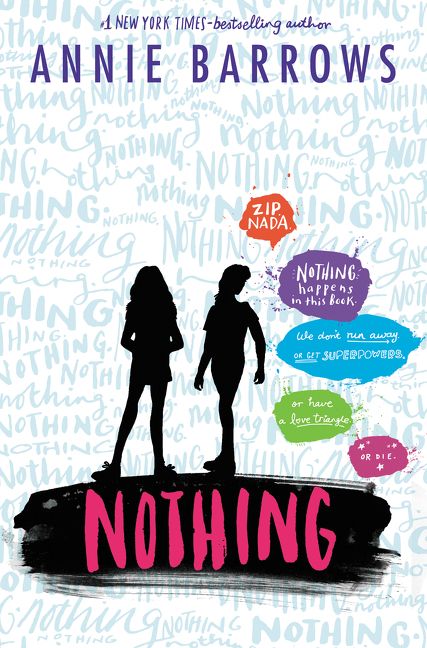
Enjoy An Exclusive Sneek Peek Of: Nothing by Annie Barrows!

Nothing

 
Nothing ever happens to Charlotte and Frankie. Their lives are nothing like the lives of the girls they read about in their YA novels. They don't have flowing red hair, and hot romantic encounters never happen—let alone meeting a true soul mate.

They just go to high school and live at home with their parents, who are pretty normal, all things considered. But when Charlotte decides to write down everything that happens during their sophomore year, she's surprised to find that being fifteen isn't as boring as she thought.


LEARN MORE


The Beginning of
Nothing


“Nothing,” said Charlotte.

“A blank book, you mean?” said Frankie. She stuffed her phone between the couch cushions and rolled over on her back. “Hater. We’re not that lame.”

“No. Not blank. Just, like, boring,” Charlotte said. “If you wrote a book about our real lives, nothing would happen. Ever.” She tossed the book she was reading over the side of the couch and slid down, wedging her feet into Frankie’s armpit.

“Get out,” Frankie said, slapping her foot halfheartedly.

“Shut up.” Charlotte dug her feet deeper into Frankie’s armpit and resumed talking. “In there”—she waved at the book on the floor—“the main girl has red ringlets, like, three feet long—”

“Bitch.”

“And everyone thinks she’s hot but she doesn’t care, because she has a secret.”

“Ooh-ooh, a secret,” snickered Frankie. “This is why I don’t read.”

“Guess what it is.”

“Get your feet out of my armpit first,” said Frankie.

“Guess,” commanded Charlotte.

“Rape, incest,” said Frankie in a bored voice. “Or oh my god, she’s gay.”

“Oh my god, she’s gay,” said Charlotte. “And then oh my god, there’s a rainstorm and oh my god, she doesn’t have an umbrella, so she runs into a—wait for it—”

“An AA meeting!” yelled Frankie.

“No! A sculpture class!” said Charlotte. “Where she sees a gorgeous Iranian girl with oh my god, scars on her wrists, and they exchange stares of attraction.”

“Yeah, yeah,” said Frankie. “Where’s the dead mom?”

“Dead brother. Iranian girl’s.”

“Her fault?”

“Duh.”

“Is there a scene where the main girl runs through a storm to save the Iranian girl from suicide and they touch each other and then have insane sex?”

Charlotte wrinkled her nose. “No storm.There was already a rainstorm when they met. They can’t have two rainstorms.”

“But suicide and insane sex?”

“Yeah. The sex part’s good.” With a grunt, Charlotte propelled herself halfway off the couch to retrieve the book.

“Oh god! Get your gross feet out of my face!” wailed Frankie.

Returning to the couch with a thump, Charlotte flipped through the book. “Here. Page two hundred eleven.” She passed it down the couch.

Frankie read breathily, “ ‘“No,” I whispered. I meant yes. Yesyesyes. She knew. She knew everything. She knew how to slide her cool hands under me, she knew how to open my legs—’” Frankie fell silent, reading. “Whoo-whoo, that is hot.” After a moment, she looked up at Charlotte with shining eyes. “Why aren’t we gay?”

“I know,” said Charlotte. “But we’re not. At least, I’m not. I don’t know about you. You seem a little gay to me.”

“You know what would be really good?” said Frankie dreamily. “If one of us was gay and, like, dying of secret lust for the other. And then there could be a discovery scene. And then insane sex.”

“Sorry,” said Charlotte. “Not going to happen. ’Cause we’re not gay. We like disgusting smelly guys who don’t like us. Like Kellen and Reed. Fuckers.”

“Fuckers,” Frankie agreed.

“And,” continued Charlotte,“even if we were gay, probably no one would like us. Look at Noony. It’s not like she’s having nights of insane sex. She’s having nights of insane homework, same as us.”

“Nights of homework, days of school, weekends of hanging around wishing that something would happen. And sometimes—yay!—babysitting!” Frankie tossed the book back to the floor. “Now I feel all shitty. Reading sucks.”

“We suck,” said Charlotte.

A distant slam. “I’m home!” Heels sounded heavily in the hallway, and Charlotte’s mother thumped into the kitchen. She was much smaller than her footsteps suggested. She looked suspiciously at the girls on the couch. “You haven’t been eating my lettuce, have you?”

“Hi, Charlotte,” said Charlotte. “How was school?”

“You look like you might have been eating my lettuce.”

Charlotte rolled her eyes at Frankie. “Most moms worry that their kids are getting into the liquor cabinet. My mom worries that I ate lettuce.”

“My lettuce,” her mom clarified. “The liquor’s right up there.” She pointed to a high cupboard. “Oh shit. Sorry.” She glanced worriedly at Frankie. “I shouldn’t say stuff like that. Just kidding! Don’t drink, kids!”

“Mom!” groaned Charlotte.

“Okay, okay. I’ll go change,” said her mom. “Don’t do drugs!” She clomped away.

Charlotte winced. “She’s a weirdo.”

Frankie nodded. “But still: the eccentric mother. At least you’ve got that.”

Charlotte laughed. “Nah. Only grandmas get to be eccentric. Moms in books are either dead or drunk.”

“Nuh-uh. I’ve read ones where the mom is all life-forcey and wacky.”

“Those ones die,” Charlotte pointed out.

“Oh yeah. Right.”

“The thing is, real life isn’t about anything. That’s what I meant,” Charlotte said. Frankie looked a question. “You know, when I said that a book about our lives would be about nothing. There wouldn’t be a plot, because we do the same stuff every day.”

“No wild sex, either,” said Frankie glumly.

Charlotte shook her head. “Nobody our age actually has wild sex.”

“Aaron Shields does. He says.”

Charlotte rolled her eyes. “No one he’s doing it with says so. You know Lena? She said never again. So, okay: no plot, no sex, and no character development, because everyone’s exactly the same as they’ve always been.”

“Hey!” Frankie kicked her. “I’ve changed a lot!” She frowned. “Haven’t I?”

Charlotte snorted. “You wish. I’ve known you since you were eight, and you haven’t changed at all.”

“You have. You’re more of a bitch.”

“Shut up.”

Frankie pulled her phone out from the cushions and looked at it. “Check out my ratio,” she said, holding out her phone.

Charlotte glanced at the phone. “Groovy.” Then came a long period of silence while Frankie liked photos and Charlotte gazed out the window.

“Look—” Frankie held out the phone again. “She’s wearing that V neck you almost got. I hate that color.”

“Yeah.” Charlotte nodded absently. “You know, I’m going to do it.”

“What? The V neck? I don’t—”

“No. The book. I’m going to write a book about what our lives are really like,” said Charlotte. “I’m going to make it my senior project.”

“You’re only a sophomore,” said Frankie.

“I’ll get it done early.”

Frankie screwed up her face. “But nothing ever happens to us.”

“I know!” said Charlotte excitedly. “That’s the point! It’ll be, like, a searing document of today’s youth and how incredibly boring our lives are!”

Frankie paused. “Am I going to be in it?”

“Hello? You’re my best friend. You have to be in it. This is a true story.”

“Can’t you make something happen to me?”

“Nuh-uh! Only the truth!”

Frankie groaned. “Oh my god, I’m bored already.”

“Too bad, Franklin.”

“Fuck me,” said Frankie.

And that was how Nothing began.


Original post: kkmalott.booklikes.com/post/1590658/enjoy-an-exclusive-sneek-peek-of-nothing-by-annie-barrows

Wednesday, August 16, 2017

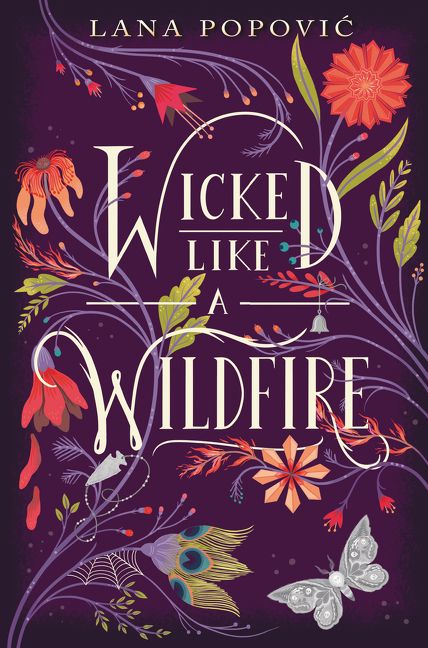
Enjoy An Exclusive Sneek Peek Of: Wicked Like a Wildfire by Lana Popovic!

Wicked Like a Wildfire
All the women in Iris and Malina's family have the unique magical ability or "gleam" to manipulate beauty. Iris sees flowers as fractals and turns her kaleidoscope visions into glasswork, while Malina interprets moods as music.

But their mother has strict rules to keep their gifts a secret. Iris and Malina are not allowed to share their magic with anyone, and above all, they are forbidden from falling in love.

But when their mother is mysteriously attacked, the sisters discover a wicked curse that haunts their family line.

LEARN MORE


ONE
Cattaro, Montenegro


MY SISTER AND I WERE BORN ALL TANGLED UP together, both tiny enough that our unruly descent just narrowly missed killing our mother. I liked to think there would have been a fair bit of screaming on Mama’s part in the ruckus that followed, but that’s just my wicked fancy. Maybe she was stoic and flawless as ever, Snow White giving birth under glass. Either way, tending to her, no one spared the time to note which of us had arrived first. And so although we weren’t identical, by sheer bloody technicality we were always the same age, neither a minute older nor younger than each other.

Mama kept us in a single cradle, one that ÄŒiča Jovan had carved for her from cherrywood before we were born. It was a whimsical thing fit for changeling children, wrought with mermaids trapped in ivy, open seashells with tiny apples growing in them instead of salty flesh. Sometimes I wondered if I’d have liked my own cradle as much as I would have liked having my own room once we were older. But Malina still liked to fall asleep by matching her breathing to mine, rubbing her feet together like a grasshopper.

The only real bedtime story Mama ever told us traced back to those early days, when we were both so little the tops of our skulls hadn’t yet hardened into something that could withstand the world. The mother I knew might have been tempted by that fragility, the urge to press her thumbs into such yielding clay. To see what marks she could make.

She must have been so different, then.

Instead, when we were old enough for our pale eyes to focus, she brought an assortment of offerings on a milky sea-glass platter. From it, she plucked tiny slivers of fruit and brushed them over our lips, one by one. Apple, mango, strawberry, papaya, prickly pear, some so exotic she could only have gotten them from the cruise ships that docked in the bay, rather than the open-air market outside the Old Town walls. Each was at its peak, the perfect moment of ripeness before turning. Then she passed violet petals beneath our noses, followed by jasmine, orchid, and peony; small lumps of ambergris; splinters of oud wood and sandalwood and myrrh.

Waiting to see which would bring forth the gleam, the magic that ran through our blood.

For me, it was the hibiscus flower, the petal red and fleshy as our mother trailed it over the tip of my nose, before she let me gum it to release its tart flavor. For Malina, it was a gleaming, perfect cherry, which Mama crushed into a paste that she let my sister suck from her ring finger.

It was bad luck to name a daughter after the thing that first sparked the gleam, Mama said. So I was Iris, for a flower that wasn’t hibiscus, and my sister was Malina, for a raspberry. They were placeholder names that didn’t pin down our true nature, so nothing would ever be able to summon us. No demon or vila would ever reel us in by our real names.

Even caught up in the story, Mama could never quite explain what the gleam looked like once she found it. Maybe our cloudy baby eyes cleared, like a sky swept by a driving wind. Maybe our tiny hands clenched fistfuls of air, seeking the tools that we’d use to capture the gleam once we were older. She never said.

Listening to her tell it, I could have sworn that she’d loved the needy little creatures Malina and I had been. Even if the whole thing was just a story—who rubs flowers and fruit and whale vomit on babies, anyway? What if one of us had been allergic?—it was still beautifully spun. There was love in its very fabric.

Then again, all that was seventeen years ago. These days, had someone asked me if our mother loved us, any “yes” would have caught in my throat like a fish bone. And had someone asked me if I loved my mother, I thought I knew what I would say.

But then she died without dying, and I didn’t know anything at all.


THAT WHOLE WEEK felt like a gathering storm. It was only the end of May, but already so stifling that just the effort of breathing made you mutinous. Malina and I worked split shifts at Café Tadić since school had let out for the summer, and that Tuesday I’d drawn the early straw, which I usually preferred. On my way out at six a.m., I’d see the sunrise over the mountains that Cattaro huddled against, the sky glowing like a forge before the craggy peaks above us lit with the first slice of the sun.

It reminded me of what my world had once looked like, brilliant and blazing and alive from every angle, back when I could make almost anything bloom.

But the sky was still a barely blushing dark as I trailed the side of our tiny house just before five, wincing as the courtyard pebbles dug into my soles. I’d taken my flip-flops off to minimize crunching in the predawn hush. Mama would already be at the café—she’d been asleep long before I snuck out the night before—but Mrs. Petrović next door was a nasty, busybody hag who could have been a KGB spy in another life, or possibly this one. Ratting me out to Mama made her downright gleeful, pointless as it was. Mama knew perfectly well she couldn’t keep me inside when I wanted out. I only bothered with the skulking to avoid the fights—“What kind of mother do you make me look like, sneaking out like a thief in the night?”—and even that was mostly for Malina. She couldn’t stand the sound of our mother’s rage battering against mine.

I was still bobbing along on some mixture of high and tipsy as I hauled myself onto our window ledge and swung my legs over, the contentment lingering round and compact in my belly like a sunwarmed egg. That wouldn’t last. Soon, it would crack into a slimy nausea, just in time for my arrival at the café.

A faint rumble of triumph echoed through me. Along with most everything else that I did, Jasmina the Peerless hated it when I came to work hungover. And this morning I wouldn’t even have time to wash the alcohol fumes from my skin and hair. A small—and smelly—victory, but I’d learned to take them as they came.

Malina was still sound asleep as I gingerly dropped both feet onto our splintered hardwood floor, toe to heel, bending over to deposit my flip-flops beside them. My stomach lurched; maybe that rumble hadn’t been all triumph. I leaned my butt back against the sill, breathing deeply to settle my insides. We kept our window flung wide open in the summer, and the slight breeze stirred the multicolored Japanese parasols fanned out across our ceiling, stripped of their handles and overlapping one another.

This was one of my projects from years ago, before I graduated to proper glassblowing under ÄŒiča Jovan’s watchful eye. When my gleam began to wane, Mama had presented me with a consolation prize, an article about American artist Dale Chihuly’s largest installation: the Fiori di Como, a garden of glass flowers blossoming on the ceiling of the grandest hotel in Las Vegas. Its steel armature alone weighed ten thousand pounds; it had to, to support the forty thousand pounds of glass that clung to it. It was the biggest glass sculpture in the world.

I had painted the parasols with a painstaking, delicate rendering of the wisteria flower tunnel in Kitakyushu, Japan, gridding out the slim ribbing of the tunnel’s truss to create the optical illusion of dimensionality—so that whenever Malina and I looked up, it would feel like we stood in the Kawachi Fuji Garden, beneath a pink-and-violet, pastel rain of dripping wisteria. Mama hated it. She didn’t have to say so, but I’d seen the tightening in the small muscles of her face so many times when she came in to fetch one of us and couldn’t keep herself from looking up into the shower of flowers I had painted for Malina and me.

Maybe her distaste made me love it just that much more; I wouldn’t have put that past me. But that was a fringe benefit, far beside the point. What I really loved was looking up and knowing that a place existed for me somewhere far away from here. A place that belonged to me at least in half.

But this morning, the sight of the paper petals gave me a flutter of unease. Passed out on Nevena’s couch last night, I’d dreamed of flowers, fields of black roses that glistened wet beneath a sky hovering on the brink of storm. Each time I woke it had been gasping and sweaty, heart stuttering in my chest until the alcohol and weed dragged me back down. I hardly ever remembered my dreams, but I could still nearly smell those dark roses, taste the slippery dew on the petals as I tore them off their stems and placed them on my tongue.

Shaking off the sudden chill, I tripped over one of Malina’s strappy sandals and banged into our vanity table, cursing under my breath as our perfumes rattled. Our room was so tiny that we could reach out and bridge the gap with touched palms when we sat on the edge of our beds. On cue, Malina flung herself over from her stomach to her back, like a breaching dolphin. She draped an arm over her face and mumbled thickly. I caught a drawn-out “Riss,” followed by what sounded suspiciously like “calzone.”

“Oh, I think not, milady,” I told her. “Fetch your own lunch. You don’t have to be at the café until one anyway, so just grab a sandwich on the way or something and we can have calzones from the Bastion for dinner, if you like.”

She gave a disgruntled groan and rolled back over to face the wall. I shrugged and turned to our tarnished mirror. My black tank top from last night was at least three years old and too small, embossed with a pair of glossy red lips pursed around a sequined skull. With my low-slung denim cutoffs, it showed the canvas of lower belly pinned between my hip bones—and if there was one thing Mama couldn’t stand, it was an unseemly amount of daughterflesh on display. My hair was too straight to tangle, but the eyeliner had smeared nicely in my sleep. The overall effect was a little like something wary, pale-eyed, and possibly bitey peering out from the overhang of a cave.

Perfect. Degenerate chic, at your service.

Before I slipped out, I darted over to kiss Lina’s sleep-mussed temple. Her black curls—so dark they seemed nearly blue in certain light, but with the most surprising sable undertone where the sun caught their depths—were bird’s-nest tangled, and she smelled warm and sleepy, Dove soap and the lingering patchouli that was the base of her favorite homemade perfume. Beneath it, I could smell her skin, and my stomach bucked with love. For a moment I had a pang of powerful longing, like a gong rung inside my belly, for the nights when we had slept cuddled together, our sweet baby breath whispering over each other’s faces.

Lina stirred, scrunching up her face like a little girl. “Riss,” she mumbled, “is there a reason you’re sniffing me like a truffle pig?”

I dropped down onto my own bed as she propped herself up on her elbows, yawning hugely. “Maybe I just relish the scent of sister in the morning.”

“That sounds purely wrong.” She wrinkled her nose. “Can’t say I reciprocate, either. What were you doing at Nevena’s, anyway, bobbing for apples in a tub of rakija? I don’t know how you stand that stuff; you’d think they could make apricot brandy taste better than rat poison mixed with cheap perfume. Who else was there?”

“That is for us, the cool and popular, to know, and you to find out.” I grimaced. “Or more like the cool and the popular and yours truly, Nev’s impostor tagalong. No one else much worth talking to, really. But you should still come out with me sometime. Get all wild and free and such, for once.”

She gave me a sleepy half smile, a glossy black curl sliding over her rounded cheek. My sister had the sweetest face, a gentler rendering of our mother’s that drew from our father mostly in the slight slant of her gray eyes. Her full lower lip was cleft like a cherry, and it made all that beauty somehow both playful and kind. You could easily see the shared blood between us, and maybe on the surface, you might even mistake us for the same substance.

But like water and alcohol, the resemblance ended there.

“Maybe I like staying home?” she said. “Maybe I have better things to do with my nights than tag along to your spite parties?” It always got under my skin when Lina talked in questions; she’d picked it up from years of playing ambassador between me and Mama.

“Oh, like maybe walking on eggshells around Jasmina the Peerless while she plans the next day’s menu and ignores you?” I mimicked. “And I don’t go out just to spite her, you know. Not everything I do is about her.”

“Seems like it is, these days,” Lina said quietly. She dropped her eyes, black lashes fanning lush against her cheeks, her fingers twisting into the sheets. Her hands were the unloveliest part of her, wide palms and spidery violinist’s fingers with cuticles run ragged from her nervous nibbling. My own had gathered a respectable collection of burns and nicks from glassblowing and working at the café, but they were still fine-boned and pretty, the nailbeds slim. I won when it came to hands. At least there was that.

“A little easy for you to say, isn’t it? You can still sing like you used to, back when she still let us practice with her.” I couldn’t keep the bitterness from my voice, like one of Mama’s orange rinds before she candied them. “I can’t make anything bloom other than flowers anymore, and even then only I can see it.”

Except for when I drink just enough, I didn’t add. Or smoked so much that my thoughts sparked around each other like a school of minnows, slippery and silver, impossible to grasp.

You can sing like you always could, and still she doesn’t even hate you.

“I’m sorry,” Lina whispered, struggling to meet my eyes. I knew she could feel the roil of my emotions, that it chafed her not to sing it back at me or soothe me, but sometimes I couldn’t curb myself just to ease her. “I know that’s hard for you. But maybe it’s better this way? I can sing, but that’s all it is—weird, maybe, but just _song_. There’s nothing for anyone to see. But you, it used to be like New Year’s Eve when you made things bloom. And you know we can’t be all flash and glitter like that. It’s not safe for any of us.”

I clenched my teeth until my jaw burned. Safety was Mama’s eternal refrain. It was why we’d only eaten the moon together at nighttime in the tiny garden behind our house, hidden by the trellis of creeping roses and oleander, back when Lina and I were little. “Only in the dark, cvetiću, and only with each other,” Mama would whisper in my ear, holding my hands in her strong grip as I bloomed the starlight dappling through the canopy of leaves above. “That’s the only place we’re safe.”

I couldn’t remember the last time our mother had called me “little flower,” or touched me with such tenderness. As if I had grown into a cactus instead of something softer, and she didn’t want to risk my spines.

“The townsfolk with the pitchforks, I know,” I said. “Lovers and neighbors and friends, all turning to burn the witches. But don’t you wonder sometimes if it’s worth it, giving up so much? When we still have to keep folding ourselves so small all the time?”

Lina looked away, a soft flush rising on her pale skin. “Of course it’s worth it,” she murmured. “Beauty’s worth it even in the smallest scale. You have your glass, I have my violin. It’s enough, like Mama always said.”

Yet even as she said it, she began humming under her breath. The back of my neck prickled, and a wash of goose bumps spread down my arms. Even after all these years, hearing Lina harmonize with herself always gave me chills, the way it sounded like three voices in one. This melody was subtle, three layers of a bittersweet arpeggio that split and reflected my emotions like a prism: the anger, the loss, and the biting sense of injustice, along with a gentle apologetic undertow that was her own offering.

There was another hue to it, too, a tinge of guilt that didn’t feel like mine. Even as the song melted my annoyance with her like spun sugar in water, I frowned, trying to place it.

She caught herself abruptly and cut off the melody.

“Sorry,” she said, clenching both hands in her lap until her knuckles turned white. “I know you hate it when I do that. Do you—will you be going to the square after your shift today? If Nevena stays longer at the café, I could leave early and bring my violin, come keep you company?”

Coming from Lina, this was a fairly high-level peace offering. I sold my glasswork figurines to tourists in the Old Town’s Arms Square, and Malina’s singing and playing always meant I’d sell more that day. It made customers pliant, more willing to part with their money for a pretty piece of glass. Mama had no idea we ever did it, of course. And if it felt a little swindly to sway people like that, it only added to my thrill. Lina had never liked that part of it as much as I did, even if she was only making it easier for people to do what they already wanted. It baffled me how much this bothered her; what was the point of power at all, if she shrank back from it anytime it caught and flared?

Especially when hers still gleamed so brightly while mine guttered by the day.

“I thought you had a violin lesson with Natalija this afternoon.”

“I can cancel that, if you want. I already saw her earlier this week.”

“Don’t worry about it,” I said curtly, stepping back into my flip-flops. “I only have a few pieces left from the last batch, anyway. Not enough to show.”

She sighed behind me. “Riss—”

“I’ll see you later.”

I could feel her eyes heavy on my back as I left.


Original post: kkmalott.booklikes.com/post/1589343/enjoy-an-exclusive-sneek-peek-of-wicked-like-a-wildfire-by-lana-popovic

Monday, August 7, 2017

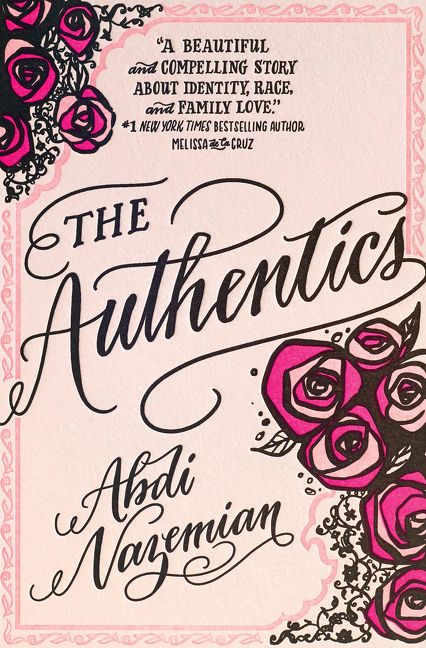
Enjoy An Exclusive Sneek Peek Of: The Authentics by Abdi Nazemian!

The Authentics
Daria Esfandyar is Iranian-American and proud of her heritage, unlike some of the “Nose Jobs” in the clique led by her former best friend, Heidi Javadi. Daria and her friends call themselves the Authentics, because they pride themselves on always keeping it real.

But in the course of researching a school project, Daria learns something shocking about her past, which launches her on a journey of self-discovery. It seems everyone is keeping secrets. And it’s getting harder to know who she even is any longer.

With infighting among the Authentics, her mother planning an over-the-top sweet sixteen party, and a romance that should be totally off limits, Daria doesn’t have time for this identity crisis.
 
LEARN MORE
 

Chapter One
 
WHEN YOU LOOK UP AT the sky in Los Angeles, all you see is a strange film of smog, like the whole city is filtered through the lens of your dirtiest sunglasses. You can’t see any stars. And if you’re really unlucky, there’s a blimp up there writing the words “Happy Birthday, Heidi!!!!!!!!!!!!!!!!” in the sky in pink. Yes, with sixteen exclamation points, one for every year of my former best friend Heidi Javadi’s life.
I was at the rented mansion hosting Heidi’s sweet sixteen party, wishing I was anywhere else. Seriously, I would rather have been dissecting a bat or listening to my mother lecture me about how there’s nothing shameful about Spanx.
Caroline led Joy, Kurt, and me inside. I turned my gaze down from the sky toward the mansion the Javadis rented for Heidi’s party. Beautiful cocktail waitresses in pink dresses stood at the entrance of the event, holding pink champagne for the grown-ups and pink “Heidi-tinis” for us, welcoming us to this very opulent version of hell.
“You guys know this is exactly what Iran was like before the revolution, right?” I asked.
“Obviously,” Kurt said. “Everyone knows all of Iran was painted pink until those mullahs stepped in.”
“And Heidi’s name was permanently emblazoned over the skyline of Tehran,” I added.
Caroline laughed, slapping me on the shoulder a little too hard. Caroline did everything in her life with a little too much passion. She was the most outspoken member of our group of friends. If someone was leading the way, it was usually Caroline.
Kurt, Joy, and Caroline had been their own little posse since junior high. I joined the crew when high school began, so I was still the newbie. But I was the one who had dubbed us the Authentics, because my new friends were the first people I’d met more concerned with being who they were than with who others wanted them to be. We weren’t the coolest kids in school, or the most popular, but we were the realest. At least that’s what we thought.
“Wow,” Caroline said, looking at the pinkstravaganza around us. “Is this the most Persian party in the history of parties?”
“It may be super-Persian,” I said, “but it has nothing to do with being Iranian.”
“Semantics,” Caroline said. Being my friend, she knew that Persian and Iranian were terms the same exact community of people used to describe themselves. Persians felt pride in their ancient empire and shame about the current regime of their homeland, while Iranians believed in accuracy over pride and shame. “This is who you are, Daria. Embrace your truth. You do you.”
“You do you is a really gross expression,” Kurt said. “It’s trying to be about self-empowerment, but doesn’t it sound like it’s about masturbation?”
“Ew,” Joy said. “Seriously. I do not want to picture you doing yourself, Kurt. And can we stop? This is actually Daria’s culture, so can we all be a little less judgy?”
Joy got it since her parents were from Nigeria, which is nothing like Iran, but which is still somewhere different. She got that living in one world in your home and in a completely different world outside your home was like being two puzzle pieces that didn’t really fit together.
We found a cocktail waitress holding a pink tray of Heiditinis, and grabbed some.
Caroline gazed around the room. Pink balloons, pink disco balls, pink tablecloths, pink cupcakes. “This is color fascism,” she announced drily.
“Or tint totalitarianism,” Kurt said, and Caroline high-fived him.
But I was still stuck on Iranian stereotypes. “I mean, my culture basically invented poetry, math, and rice,” I said. “But all people seem to care about is that some of us have tacky taste, wear too much cologne, and build really ugly McMansions.”
“Hey,” Kurt said. “At least you have a culture. The only culture in my house growing up was homemade yogurt.” Kurt’s mom was an actress or therapist (depending on what day you asked her), and she was all about growing her own vegetables and fermenting kombucha.
Kurt had a point, but I hated that most people who heard the words Persian, fifteen, and Beverly Hills would immediately assume I was a spoiled Persian princess. They would’ve thought I was one of those girls who pouted until her father hired One Direction to perform at her sweet sixteen party. For the record, I liked One Direction . . . when I was nine.
The girl you’re imagining—the beautiful Persian princess—that’s Heidi, who stood in a circle with her Persian posse, aka the Nose Jobs. Heidi looked up at me and smiled. Her just-whitened teeth were perfect. She was wearing a skintight pink leopard-print dress. Her hair looked like it was straightened on an ironing board, and it had pink highlights for the occasion. Basically, she looked like a cross between Kylie Jenner and Hello Kitty, and by the way, she was the kind of girl who would’ve taken that as a compliment.
Heidi gave me a small wave with her left hand, and I noticed how perfect her manicure was. She had turned into our mothers, and I had turned into a chunky girl with dirty fingernails. I gave Heidi an awkward wave with my left hand, and then I quickly tried to hide my hands in my pockets. But the poufy pink dress I wished I weren’t wearing didn’t have pockets, so the gesture just felt weird and unfortunate. I knew better than to bother walking over to Heidi, and she didn’t come over either. It was hard to imagine that Heidi and I used to be best friends, but that was a long time ago. Now she was beautiful and popular, and I was, well, authentic.
Heidi’s mother, basically a grown-up version of Heidi, approached her and whisked her off to another room, no doubt to greet some elderly Persians. Respecting your elders is a really big thing for us.
As the Authentics and I did a lap around the room, I realized this was the first time my two disparate worlds—high school and Tehrangeles—had been brought together. To my left were the drama kids. To my right were my father’s golf buddies. To my left was our high school soccer team. To my right were my mother’s rummy ladies. And then I saw my parents gliding toward me, looking sophisticated as ever. We had arrived separately, since I’d gotten ready at Joy’s house.
“There you are,” Baba said. “You look beautiful.”
He was lying. I looked fat and pimply, though the dress Joy had picked out for me was cool in a throwback kind of way.
“Thanks, Baba,” I said.
“Hello, kids,” my mom said as she took in our colorful outfits. Caroline was wearing a pink bow tie with a vintage white polyester suit. Kurt was wearing a pink checkered shirt, white pants, and his signature fedora. Joy wanted to be a designer, so she’d picked all our outfits, but obviously hers looked best, a fuchsia disco dress she found on Melrose that she swore once belonged to Bianca Jagger. Joy was good at dressing us, but an expert at dressing herself. True confession: I had to Google Bianca Jagger, but I didn’t tell Joy. She took her style icons very seriously.
“It’s wonderful to see you all,” Sheila said to my friends. My mother liked me to call her Sheila, probably because it allowed her to pretend she was my older sister.
She was lying too. I mean, my mother liked the Authentics all right, but she wished I were still best friends with Heidi. She got Heidi, and she had no idea what to do with the Authentics. Maybe it’s because my mother valued being fabulous way more than being real. If my mother still believed in the Persian Empire, then she also believed she was its Cookie.
“Did you see the aquarium of pink goldfish in the bathroom?” Sheila said. “They’re so beautiful.”
We all laughed.
“What’s so funny?” Sheila asked. “I thought it was clever.”
“Beauty is in the pinkeye of the beholder,” I said, and my mother gave me that look she gave me when she thought I must be an alien she birthed.
“LOL,” Caroline said. Caroline’s goal in life was to skip college, move to New York, and become our generation’s preeminent lesbian performance artist. In her last piece, she vowed to incorporate an internet acronym into every sentence she spoke. IMHO, it wasn’t her strongest piece (that was definitely the one with the rats and the stilettos), but it did get people talking about communication and technology, and how we had all stopped really listening to each other.
Baba grabbed a pink meatball from a waiter’s tray. “Is this meatball undercooked or color-treated?” he asked as he popped it into his mouth.
Sheila laughed and threw her hair back. She turned to me and asked, “So, any ideas for your party yet?”
“We’ve talked about this. I don’t want some gross sweet sixteen party,” I said. “I just want to invite my friends—my real friends—over to the house.”
Perhaps sensing a tense mother-daughter moment, Caroline announced, “I think I’m gonna go try some pink fondue. The line doesn’t look too bad right now.” Joy and Kurt followed Caroline, and though I wanted to go with them, I stayed behind with my parents. Sometimes I felt like so much of my life was an obligation. There were so many things I had to do that it was hard to remember what I really wanted to do. But that’s what I loved most about the Authentics. They were the first part of my life that hadn’t been curated by my parents.
“Daria, please understand,” my mother pleaded. “We can’t throw a party without inviting the Ghorbanis, and the Palizis, and the . . .”
As Sheila continued rattling off the names of every Iranian family within a ten-mile radius of Beverly Hills, I caught Baba giving me a sympathetic glance. “Sheila djoon,” Baba softly interrupted, “I think Daria already understands that you would like to invite the entire Persian community to her sweet sixteen.”
“It would be rude not to,” Sheila said, as if we had no choice in the matter.
“Yes, I understand,” Baba said. “But since it’s Daria’s birthday, perhaps we can all compromise . . . and only invite half of the Persian community.”
And to my surprise, my mother threw her hair back and laughed again. This was her physical cue that she was having a good time. She did it when she was dancing, watching reruns of Seinfeld, or winning a round of rummy. Her hair was her tell. Kurt, whose mother had instilled in him a very deep love for astrology, said it was because she was a Leo. He said Leos needed their manes brushed all the time. I think Kurt meant that Sheila needed to feel admired, and Baba had figured out exactly how to do that. As for me, I wasn’t much of a mane brusher. I was the girl who’d chopped the hair off every Barbie doll I ever had.
“Well, I love parties,” Sheila said. She wasn’t lying. Sheila was always telling me to dress up more, go out more, put on more makeup, and have more fun. Sometimes, when I was in the library studying, I would tweet that I was having a dance party with friends just so Sheila would get off my back.
“So, Daria, if you don’t want your sweet sixteen to be the party of the century,” she continued, “then how about we focus on my forty-ninth birthday party next summer. I’d like everything to be lavender.”
“Even the goldfish?” I cracked, and to my shock, Sheila laughed and threw her hair back. Had I brushed her mane without even meaning to?
“Okay, we’ll throw you a lavender forty-ninth birthday,” Baba said, with a smile my way. In truth, she was fifty-two, but we let her get away with shifting her age as she saw fit. “It’ll be a party to remember,” Baba said. “We’ll paint the house lavender, and have lavender fondue, and lavender meatballs, of course.”
Sheila laughed and slapped Baba’s arm playfully. He pulled her close to him and gave her a kiss. And by kiss, I mean he went for it.
“You guys, get a room,” I said. “Preferably soundproofed.” Their passion was a cruel reminder that I had never even kissed anyone.
Luckily, a slide show began, diverting my parents’ attention. The whole party oohed and aahed as photos from Heidi’s past appeared on-screen. There was baby Heidi, smiling a gaptoothed smile in her mother’s arms. There was toddler Heidi, in ballet class, obviously. There was seven-year-old Heidi, randomly sitting on Kelly Ripa’s lap. There was tween Heidi, riding a roller coaster with her father. There were Heidi and her new friends, looking airbrushed and blow-dried, posing on top of Heidi’s dad’s car like they were Bravo reality stars doing a Carl’s Jr. commercial. And there was Heidi and me. We were twelve years old, lounging by her pool. Heidi, of course, looked adorable. I, on the other hand, looked frightening. My skin was covered in acne, my hair was frizzy, and I was wearing a too-tight bathing suit that made me look like a raspberry muffin.
All around us, the Persian parents commented on how cute Heidi looked and how beautiful she always was and how she looked just like her mother. I hated myself in that moment, because I wanted their approval as well. I wanted to be cute and beautiful and to look like my mother. The picture was up there for all of five seconds, but by the fourth second, I felt like I was being suffocated by it.
“Can we please leave?” I begged my parents in an urgent whisper.
“They haven’t even cut the cake,” my mother replied in a hushed tone. “It would be rude to—”
But I didn’t wait for her to finish the sentence. Instead, I walked out, causing a few of the guests to turn their attention away from the slide show. My parents followed me outside, and I could feel my mother’s annoyance radiating off her.
Once we were outside and alone, I turned to my mother ferociously. “You know who’s rude, Sheila?” I asked. “Heidi is rude. She makes me feel awful.”
“She’s your friend,” Sheila argued.
“If she’s my friend, then the shah and the ayatollah were besties.”
“Who is the shah in this situation?” Sheila asked.
“Obviously, she is,” I said.
My mother rolled her eyes. If anyone was going to be the shah in this analogy, it would be her daughter.
“Maybe you’re the queen,” Sheila said.
“Fine,” I said, “I’m the queen.”
Sheila placed a hand on my shoulder and looked me in the eye. “Now you just need to believe it.”
Original post: kkmalott.booklikes.com/post/1587340/enjoy-an-exclusive-sneek-peek-of-the-authentics-by-abdi-nazemian

Wednesday, August 2, 2017

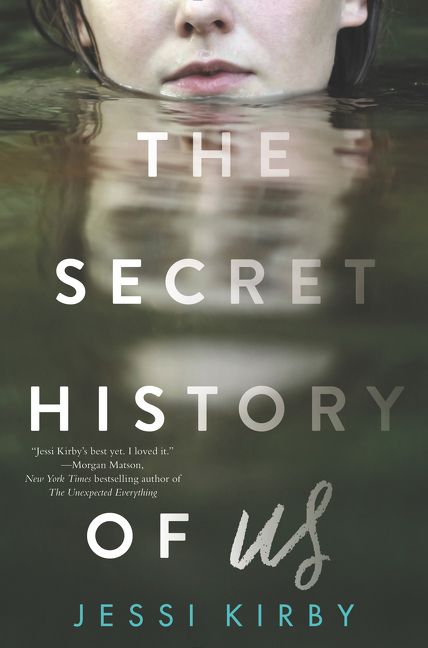
Enjoy An Exclusive Sneek Peek Of: The Secret History of Us by Jessi Kirby!

The Secret History of Us  
When Olivia awakes in a hospital bed following a near-fatal car accident, she can’t remember how she got there. She figures it’s because she was in a coma for a week, but as time goes on, she realizes she’s lost more than just the last week of her life—she’s lost all memory of events that happened years ago.

Gone is any recollection of starting or graduating high school; the prom; or her steady boyfriend Matt. Trying to figure out who she is feels impossible when everyone keeps telling her who she was.

As Liv tries to sort out her family and friends’ perceptions of her, the one person she hasn’t heard enough from is Walker, the guy who saved her the night her car was knocked off that bridge into the bay below.

Walker is the hardened boy who’s been keeping his distance and the one person that has made Liv feel like her old self…whoever that is.
 
LEARN MORE
 

The girl he pulls to the surface is dead. I know it the moment I see her.

The camera zooms in, shaking a little as she comes into focus. Even in the golden lights shining down from the bridge, her skin is an unnatural shade of blue. Her top hangs loose and heavy with water from one shoulder, revealing a black bra strap. Long, dark hair streaks down her face in waves, covering her eyes, nose, mouth, and I want to brush it away so she can breathe, but the blue of her skin says it wouldn’t help. She isn’t breathing. She can’t feel the hair covering her face or the water that moves in her lungs instead of air.

She can’t feel anything.

Not the arms that drag her dead weight from the dark water, or the crack of her skull against the boat as they lift her into it. Not the hands that lay her down roughly on the deck, then feel her neck, her wrists, anywhere for a pulse. She doesn’t feel the bite of the night air against her bare skin when they rip her shirt open, straight down the center, without hesitating.

I watch, relieved that she can’t feel the force of those hands as they come together, one on top of the other, in the middle of her chest, and thrust downward. Deep enough to produce a contraction in her motionless heart. Hard enough to send a rush of blood and oxygen through her body, to her brain. Strong enough to crack ribs.

I wince at this, and at those hands that come down again and again, the full weight of the person behind them compressing her chest, her lifeless body convulsing under the force of them each time. Over and over.

But then, like a reprieve, the hands stop, brush the hair from her face, almost gently, and tilt her chin to the sky. The camera zooms in on her face just as he pinches her nose and brings his mouth to her blue lips. He breathes his own air into her lungs before his hands move back to the center of her chest to start the cycle again.

Her mouth begins to foam.

Sirens whine in the distance. Voices off camera murmur urgent words that are lost in the wind. Someone is crying.

“My God,” the voice from behind the camera says, “it’s too late. There’s no way she’s going to live.”


ONE


“LIV?”

It’s a voice that’s familiar. Warm in a way the makes me want to keep hearing it. Comforting, but I can’t place it. I search. Through the water or the fog—I can’t tell which because it’s everywhere, all around me.

But I know this voice. I know her.

Her.

I grasp at the word, reach for something to pair it with. A name . . . a face . . . something, anything, but I come up empty, except for that familiar feeling.

“We’re right here, Livvy. Right here,” the voice—she— says, and I feel a gentle hand on mine. It doesn’t poke or prod, just sits there, still and warm, and I relax at the touch, and the sound of my nickname.

“Hey, Liv,” another voice says gently. A male voice. “Can you hear me?” he asks.

I know this one too. And I can feel the answer, just beyond my reach. I wade through the heaviness all around me, fumble through the haze that seems endless, and this time I don’t come up empty. I find the answer.

Yes, I can hear you. Yes. Yes. Yes.

“If you can hear me, sweetheart, try to open your eyes.”

Sweetheart . . .

I hang on to that word he said.

Sweetheart . . .

That word he always says.

Good night, sweetheart.

I know this.

Be safe, sweetheart . . .

I know him . . .

Wake up, sweetheart.

Dad.

The word materializes from the fog crystal clear, like it’s always been there, and it makes me so happy I want him to keep talking. Keep asking me questions.

“Can you wake up, Liv? Open your eyes?”

My eyes. I remember them too now and try to do what he asks, but they are weighted down—impossible, leaden things that won’t be moved.

“She will,” the first voice says, and I know all at once it’s my mom. Her warm hand squeezes mine and I squeeze back, but she doesn’t notice. “She’ll wake up when she’s ready.”

But I’m awake. I’m here!

I try to say the words. Try to let them know that I can hear them. I need them to know that their voices are so clear, and I know who they are, and I want them to stay with me. I don’t want them to leave me alone in this dream- fog place, with the never-ending beeping and buzzing and muffled voices of strangers, and strange hands that move me around, touching and checking me in what seems like a constant cycle. I summon every bit of strength I have to form the words, but they get lost in the haze between my brain and my mouth.

It’s quiet except for the machines. I panic. I don’t want them to leave me. I need to say something so they don’t leave me.

I try again, harder this time, and after a moment, a tiny sound—cracked and desert-dry—comes burning from somewhere deep in my throat.

My mom’s hand squeezes again, and I remember it’s there. Again I squeeze back, and again she doesn’t notice. Why doesn’t she notice?

“Did you hear that?” my dad asks. “I heard something, Suze. She made a sound.”

I feel the weight of his large hand come to my shoulder. “We’re right here, sweetheart. Your mom and I are right here.”

I try again to speak, and the cracked sound turns into a low moan that I don’t recognize. It burns in my throat, and in my ears, but the harder I try to make it stop, the louder it gets.

“It’s okay, baby,” my mom’s voice says. “You’re okay, you’re just waking up, that’s all. You’ve had a nice long sleep, and you’re waking up.”

Waking up.

When she says the words, I understand that’s what I need to do. That’s what they want me to do. I do my best, concentrate on my eyes. Make them blink, just barely. The brightness sends a f lash of pain through my head. I cry out so loud it scares me, and squeeze my eyes shut as hard as I can.

“The light, Bruce,” my mom says. “Get the light.”

I hear a shuffle and then the click of a switch, and in my head I try to calm down, but my skull is pounding and my throat is burning and I can’t.

“Sshhh . . . it’s okay,” my mom says, running her warm hand over my forehead now. “It’s okay.”

I realize I’m still making that low, terrible sound, still squeezing my eyes closed so hard it hurts.

My dad is next to me again, his hand back on my shoulder, his voice soft and low. “Hey, hey, hey, you don’t have to wake up yet. You just wait until you feel good and ready.”

The lightning strike in my head is gone, but tiny ripples of pain still radiate outward from someplace deep inside. I’m scared to open my eyes again, but I want to wake up, I do. I want to wake up and go home, and leave this place, whatever, wherever it is.

I try to relax my eyelids enough to let them f lutter open, just a little, bracing for the pain to come f lashing through my head again. But this time it doesn’t. I open my eyes a tiny bit more, and now I can see something. I can see the blurred outlines on either side of me—my parents. And I can hear the sudden cry from my mom, and the laugh that escapes from my dad as he leans over me and kisses my forehead.

“There you are,” he says.

For a few seconds, it feels like someone is turning the lights up slowly. And then it happens.

I wake up.


Original post: kkmalott.booklikes.com/post/1584833/enjoy-an-exclusive-sneek-peek-of-the-secret-history-of-us-by-jessi-kirby

Tuesday, July 25, 2017

Enjoy An Exclusive Sneek Peek Of: Who's That Girl by Blair Thornburgh!

Who's That Girl

 
Nattie has always been that under-the-radar straight girl who hangs out in the cafeteria with her gay-straight alliance friends.

She's never been the girl that gets the guy, let alone the girl that gets a hit song named after her.

But when last summer's crush, smoking-hot musician Sebastian Delacroix—who has recently hit the mainstream big-time—returns home to play a local show, that's just what she gets. He and his band have written a chart-topping single—"Natalie"—which instantly makes Nattie second guess everything she thought about their awkward non-kiss at that June pool party.

With her once-normal life starting to resemble a gossip magazine, Nattie is determined to figure out if her brief moment with Sebastian was the stuff love songs are made of—or just a one-hit wonder.

LEARN MORE
 

CHAPTER ONE


Everything weird started the day my dad brought home the yurt.

“Robert?”

Anne McCullough, alias Mom, was peering through the windows of our back door, cup of coffee in hand, and frowning. Robert Schwartz, alias Dad, had taken the station wagon somewhere early that morning and was now puttering around in the yard. But since puttering was one of those activities Dad did to relax, like separating the recycling or buying dress shoes on eBay, I wasn’t exactly concerned.

“Nattie?”

Natalie McCullough-Schwartz, alias Nattie, alias me, was sitting at the kitchen table, chomping through a noontime bowl of granola. It was Saturday, after all, so I was entitled to loaf around for a bit, reading and eating cereal to the soundtrack of the college radio station that my parents had playing 24-7.

“Whuh?” I responded without looking up from my phone, where I was completing my normal Saturday-morning Pixstagram catch-up session.

“Where did your dad go this morning?”

“I dunno.” I shrugged. “Groceries or something? I was asleep.”

My mom was still frowning. She had her grayish auburn hair piled up on top of her head in a knot, which could have been either an intentional artistic look or just the result of not having brushed her hair yet. I was sporting a similar style, but for the latter reason.

“Sam? Did you see my husband go anywhere?”

Huang Xueyang, alias Sam Huang, was sitting at the desk in the kitchen, eating breakfast and probably checking his email from his family in China, and shook his head. Perhaps to assuage parental guilt over their blatant negligence of every school-related activity from signing permission slips on time to “not forgetting the date of the parent potluck for the third year in a row,” the McCullough-Schwartzes had been first to volunteer when the Owen Wister Preparatory Academy needed host families for foreign exchange students. So, since the beginning of the last school year, Sam Huang had been part of the clan. It was like suddenly having a fifteen-year-old brother, which I liked because it meant I always had someone to split a microwave lasagna with, my mom liked because it meant we were putting the spare bedroom to good use, and my dad liked because Sam played classical guitar and was “the son I never had,” which made Sam and me feel kind of equally uncomfortable.

My mom looked out the door again.

“Robert?”

Even though it was October, we still had the screen door up, because procrastination is a McCullough-Schwartz family value. So my dad should have been able to hear her, but she wasn’t getting a response.

“Robert?”

There was a definite tone now. Sam poured another bowl of Cocoa Puffs. I scrolled down my phone. At the top of my feed was an artsy shot of the Donut, the front-lawn sculpture at Owen Wister Preparatory Academy that was actually called something like Concentricity of Knowledge, a photo that was intriguing because one, it was a Saturday, so no one was at school and two, it was posted by user sebdel, alias Sebastian Delacroix, who had left Wister forever when he graduated. Or so I had thought.

“I think he’s . . . Is he unloading something from the car? Sam? Nattie?”

Sam smiled but shook his head. I wasn’t going to move, but Mom clearly wanted someone involved and I, as her flesh and blood, was beholden to her will.

“Nattie. Come here.”

Reluctantly, I tore myself away from creeping on Sebastian Delacroix’s Pixstagram feed and stood up. She took a pull from her coffee and narrowed her eyes, pointing out into the backyard.

Dad was definitely out there, wearing his weekend polar fleece and covering his balding head with one of his grimy bandannas. Next to him, on top of the maple leaves that no one had raked yet, was a stack of various pieces of wood, a beat-up red toolbox, and what seemed to be a heap of fabric.

“Looks like it,” I said.

“I can’t believe this,” Mom said. “And neither of you knew anything?”

She cast a hard look back at the room, where Sam Huang was now kind of cowering.

“Sam,” Mom said slowly and a little too nicely, “you know you can tell us anything. I mean, tell me. Especially about my husband’s whereabouts.”

“I . . .” Sam Huang darted a glance at the door. “I wasn’t supposed to say.”

Mom was not having it. “Come on, Sam. Where did he go?”

Sam Huang fidgeted again. “He said he was going to pick up something for the lawn. And that it was a surprise.”

“Aha.” Triumphant, and indignant, Mom swung open the screen door and started off across the yard. I unrolled my sleeves and followed, because it was chilly and I was curious. The ground was cold and a little mushy under my bare feet, but not cold enough to make me go back for shoes.

“Robert? What’s going on here?”

Mom marched right up to the edge of the little clearing Dad had made with his supplies in the corner of the yard, and folded her arms. Around us, the air was thick with mystery, and also fog. I tried to put it together: we already had a toolshed, and both Sam and I were way too old for a swing set. I had begged for a trampoline for my last birthday, but Mom insisted they were death traps, and she was probably right, given the way Dad tended to construct things. The McCullough-Schwartz basement was a graveyard of splintered IKEA dressers and oblong birdhouses no self-respecting blue jay would nest in.

“Oh, there you are!” Dad said, as if he’d completely missed her entreaties from the kitchen. He straightened up and mopped his face with the bandanna. He was beaming. “Looking good, isn’t it?”

“What is?”

My dad’s grin faltered just slightly.

“The yurt. Of course.”

“Nattie?” Sam Huang appeared, holding my phone, which I’d left on the kitchen table. “You have a message.”

I took my phone and unlocked it to discover not one message, but three.

From: Tess Kozlowski

JAMBA ALERT

where are you

it’s important!!!

“What’s a Jamba alert?” asked Sam Huang. “Is it an emergency?”

I considered. Last May, Tess had found herself mysteriously subscribed to text alerts about smoothie deals from Jamba Juice, which we both thought was hilarious, and so, naturally, ever since then, we have referred to every text message, whether smoothie-related or not, as a Jamba alert. I knew our role as a host family was to be ambassadors for the American people, or something, but this was a weirdness that went beyond national cultural differences and into the weirdness of my particular group of friends.

“No.” I locked my phone again. Tess was my best friend and the person I trusted most in the world, but she was also the most liberal person I knew, both in her politics and her definition of important. So I knew whatever her deal was could wait until after the yurt. Whatever that was.

“The what?” Mom was saying.

“Yurt,” Dad repeated, like this was a word people used every day. “The traditional dwelling of the nomadic peoples of the steppes of Central Asia. It’s a sanctuary.”

“Robert,” Mom said slowly. “We don’t dwell in the steppes of Central Asia. We dwell in the suburbs of eastern Pennsylvania.”

“Right, but that’s just the beauty of it. It’s like an escape, for the family, right here in our backyard.” Noticing me, he wiggled his eyebrows. “Whaddya think, Nattie Gann?”

Natty Gann was the name of a plucky Depression-era orphan from a 1980s Disney movie that no one except my dad seemed to remember. It was also his favorite, dadliest nickname for me.

“I thought you said you were going to build a hot tub one day,” I said.

Actually, the putative yurt was taking over the exact space where I’d envisioned having our spa. I’d always wanted to have a cool place to put my friends—Tess, Tall Zach, and Zach the Anarchist, alias the Acronymphomaniacs, which we called ourselves not because of any actual nymphomania, but because we were fond of abbreviations and also belonged to a club with an uncommonly unwieldy acronym. It had just sort of stuck.

“He said he’d think about it,” Mom corrected.

Bzz. Bzz.

I thumbed my phone unlocked again.

From: Tess Kozlowski

nattieeeeee come hang out

“A yurt,” Dad said soberly, “is much better than a hot tub.”

This I took issue with. Because while I knew that, as a teenager teetering on the verge of adulthood and also the college process, I should have capital-G goals like “achieving purposefully,” “actionizing change,” and “not failing the math portion of the SATs,” my number one actual goal in life was just not to be weird. A hot tub was different, sure, but in a cool way. (Well, literally in a hot way, but the point stands.) A yurt, though, would just be a monument to strangeness and eccentricity—and for what? I couldn’t put it on a college application unless maybe I was applying to something like architectural school. And even then they’d probably flunk me for being too weird.

“Now, just a second, Robert,” Mom said. “We haven’t even discussed this.”

“Right, I know. But I was browsing the online yesterday night, and someone in the city was getting rid of this yurt kit for practically nothing because he had nowhere to put it, but I had to act fast or else he was just going to donate it to charity. I picked it up this morning.”

Dad looked proud, but Mom looked positively pained.

“What on earth are we going to do with a yurt?” she asked.

“What on earth would a charity do with a yurt?” I asked.

It took Dad a minute to come up with an answer. “Hang out,” he said. “Do some art projects. Or just get some nice peace and quiet, you know? The guy told me the yurt is intentionally built with a low ceiling and door, so you can’t get in without humbling yourself—”

“It’s built that way to keep the heat in,” I pointed out, vaguely recalling a social studies class.

Dad wasn’t listening. “We’ll get some cushions out here, a couple of candles, maybe a cast-iron stove to burn up some logs. . . .” He got a dreamy look in his eyes.

Mom looked like she’d rather burn the raw yurt materials than any logs. Even though she is, professionally, a creative person, Mom is not a big fan of Dad’s weekend projects. Maybe it’s because she gets to build frames for beautiful paintings all day and he’s cooped up in an office doing whatever it is executive directors of nonprofit voting-rights advocacy groups do all day, or maybe it’s because he’s left one half-dug koi pond too many in our front yard, but either way, the McCullough-Schwartzes do not have a good track record with home improvements.

“You can’t just start building a yurt in our backyard, Robert,” Mom said. “It looks . . . ugly.”

“Well, sure, it looks ugly now,” Dad said. “But soon it’ll be a circular canvas tent!”

This did not placate Mom. “What will the neighbors think?”

“It’s not for the neighbors,” Dad said. “It’s for us. Look, Sam Huang loves it.”

Sam Huang did not look like he wanted to get involved in an altercation between his host parents. I briefly wondered what would happen to him if they got divorced. Or to me, for that matter.

“We need to have a place to relax,” Dad said. “It’ll be good for us.”

Mom pursed her lips. “Does the place to relax have to be so . . . visible?”

In my pocket, my phone buzzed for the billionth time.

From: Tess Kozlowski

NATTIE JAMBA ALERT GET HERE OR ELSE WE

WILL ALL BE VERY SAD

:’( :’( :’(

I decided it was probably time to indulge Tess. And also get dressed, because it was twelve fifteen and I should probably do something more with my day than Pixstagram stalking. I was curious about the outcome of the whole yurt-stravaganza, but knowing my parents, the odds of a swift resolution were about as good as me applying to architectural school.

“I’m . . . gonna go see Tess,” I said, and backed away slowly.

“Great,” Mom said, in a tone of voice that was anything but great.

“Have fun!” Dad said brightly.

“Bye, Nattie,” said Sam Huang.

The screen door slapped behind me as I crossed the threshold back to the warmth of the kitchen and the bowl of mush that had once been my breakfast. When I stomped down the back stairs ten minutes later, Mom and Dad were at the counter, Dad gesticulating wildly and Mom laughing over a fresh cup of coffee, Sam Huang was set up at his computer watching guitar videos on YouTube, and beneath everything else, as always, the radio was softly playing an unfamiliar song.


Original post: kkmalott.booklikes.com/post/1581752/enjoy-an-exclusive-sneek-peek-of-who-s-that-girl-by-blair-thornburgh

Life's Too Frantic

So I haven't been around to blog since late November early December, I hope you all are doing well. I am keeping busy wi...